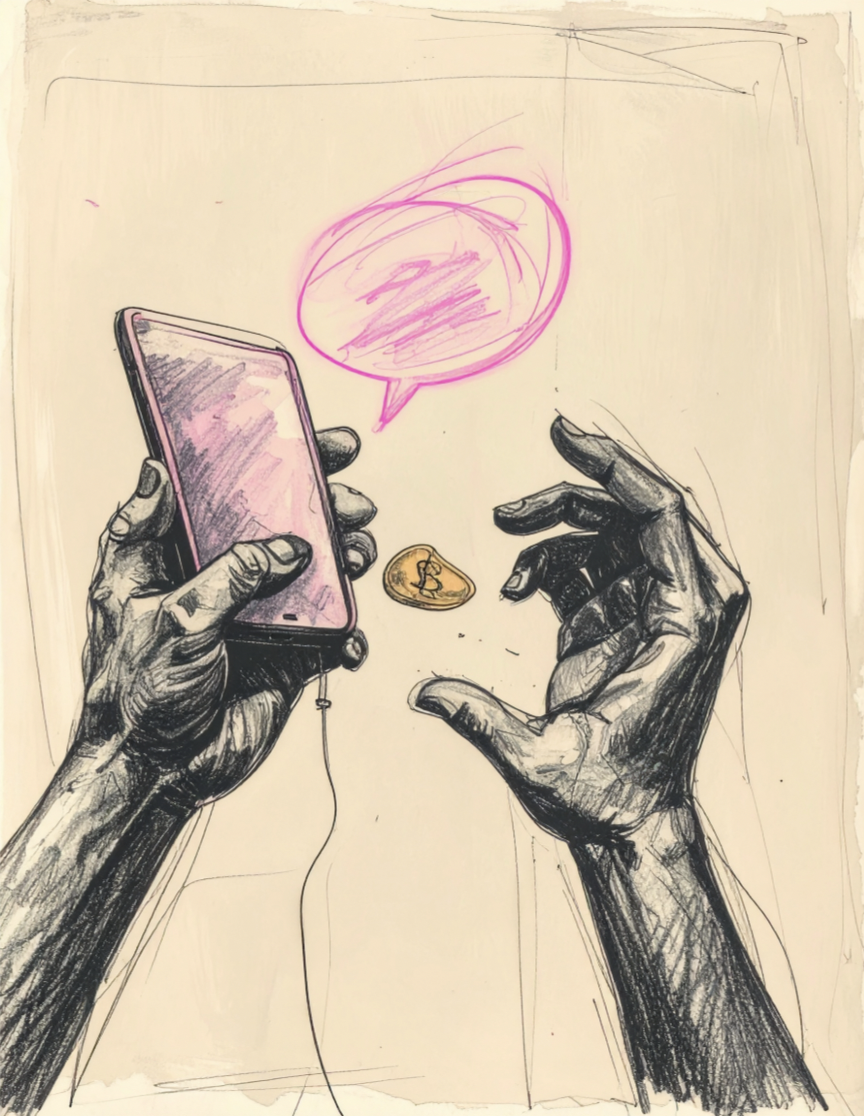
Someone owes you money. Concert tickets you fronted, a dinner they said they'd Venmo you for, a loan from three months ago that's gone quiet. And you've been sitting on the reminder text for a week, rewriting it, because something about asking for money that's rightfully yours feels like you're the one imposing.
That feeling is worth naming directly, because it's the thing distorting every draft you've written: you are not asking a favor. You are collecting a debt that already exists. The money was never yours to loan away for free unless you said so, and reminding someone of an agreement they already made isn't rude, awkward, or presumptuous. It's just closing a loop that's still open. The apology you keep wanting to add doesn't belong to this transaction.
Which means the text can be short, plain, and free of the hedging that makes these messages drag on for paragraphs.
Hey, no rush at all, but can you send over the $40 for dinner when you get a sec? Venmo's easiest for me. Thanks!
That's the whole message. No "sorry to bring this up," no three sentences establishing that you hate asking. The warmth is already built into "no rush at all," which is doing real work: it signals you're not treating this as an emergency, which keeps the ask light, while still stating the number and the method plainly enough that nothing's ambiguous.
If it's been a while and this is a repeat reminder, the tone shifts slightly, still plain, a touch more direct about the fact that it's been sitting:
Hey, following up on the $150 from the trip back in March, just want to make sure it didn't slip through the cracks. Whenever's good for you.
Notice what's absent even here: no guilt trip, no passive aggressive "I guess you forgot," no long paragraph rehearsing your patience. The facts do the work. A specific number and a specific reference point make the ask impossible to misread as vague griping, and the lack of any edge keeps the door open for an honest reply if there's a real reason it's been delayed.
One thing worth deciding before you send anything: your own policy on the money once it's out there. If it's genuinely a debt you expect back, ask like the above and follow up once more if needed, calmly, without escalating tone each time. If somewhere along the way you've realized you're comfortable treating it as a gift regardless of what gets repaid, that's worth saying to yourself honestly, because chasing money you've secretly already forgiven creates a resentment that has nothing to do with the actual dollars.
The awkwardness around asking for money back is almost always bigger in your head than in the message itself. State the number, name the ask, skip the apology. It's not a favor. It's just closing what was already owed.