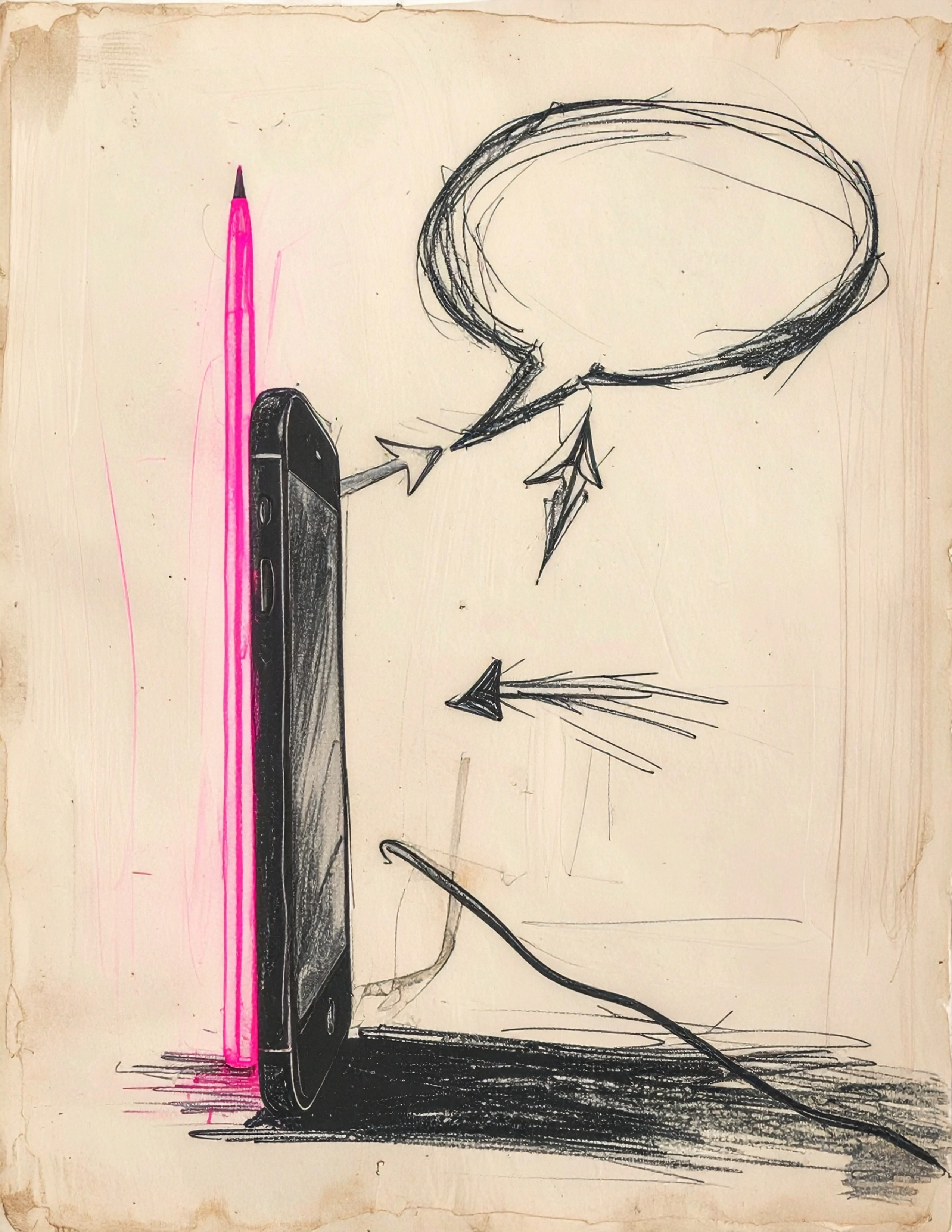
Here's an unsettling fact: people search the internet for words designed to make someone cry over text. That's a real query, typed thousands of times, which means thousands of times, someone on the other end receives the result. Maybe you just did. A message engineered to hit where you're soft, sent by someone who knows exactly where that is, because the people who can hurt us most precisely are never strangers.
Understand what you're holding first, because it changes everything. An angry text is weather: it erupts, it's overheated, and an hour later its sender is often ashamed of it. A cruel text is architecture. It was composed. Drafted, maybe redrafted, aimed at the divorce, the miscarriage, the weight, the failure, the thing you told them in confidence, and then sent, with time to reconsider at every step. Anger wants to be heard. Cruelty wants to see damage. Which is the single most important thing to know before you type anything back: a message built to cause damage is answered, truly answered, only by evidence of damage. Your tears, your fury, your long wounded reply, your 2am essay about everything wrong with them: all of it is the product landing as designed.
So the perfect comeback, the one you're drafting right now, the surgical response that will make them feel what you're feeling: it's a trap, and not because you'd lose the exchange. Because winning it requires you to become a manufacturer of the same product, and because any reply at all, brilliant or broken, confirms the hit. The comeback economy only has one currency, and it's your visible pain.
Which leaves the responses that don't pay.
Silence is the strongest, and it isn't weakness, whatever your adrenaline says. Silence answers a message built for impact with the one report it can't survive: no impact registered. If the relationship is disposable, an acquaintance, an ex on their way out, someone showing you their character in high resolution, silence plus distance plus, where warranted, a block, is a complete response. You are not required to attend every fight you're invited to, least of all the ones catered with your own softest material.
If the relationship isn't disposable, a sibling, a partner, a parent, a long friendship, then silence forever isn't available, but the reply still refuses the currency. Flat, named, and short:
That was meant to hurt, and it did. I'm not going to respond in kind, and I'm not going to pretend it didn't happen either. When you're ready to talk about what's going on, I'm willing. Not before.
Look at what it spends and what it doesn't. "It did" is not weakness, it's the removal of the game, because pretending you're unhurt is its own performance and they'd smell it. But there's no spectacle, no return fire, no essay. It names the act, sets the terms, and hands the next move back. That message costs almost nothing and holds everything: your honesty, your line, your refusal to become what just texted you.
And afterward, the part no reply can do: take the message seriously as information. One cruel text in a decade, from someone drowning in the worst week of their life, is a wound in a relationship that may survive it, with real repair. Cruelty as a pattern, aimed and repeated, is not a texting problem, and no perfectly worded reply fixes a person who hurts you on purpose, recreationally. Some messages aren't asking for a response. They're telling you the exits are that way.
Whatever you send, send it once, level, and done. The person who wrote that text spent real effort on your pain. Spend nothing on theirs.