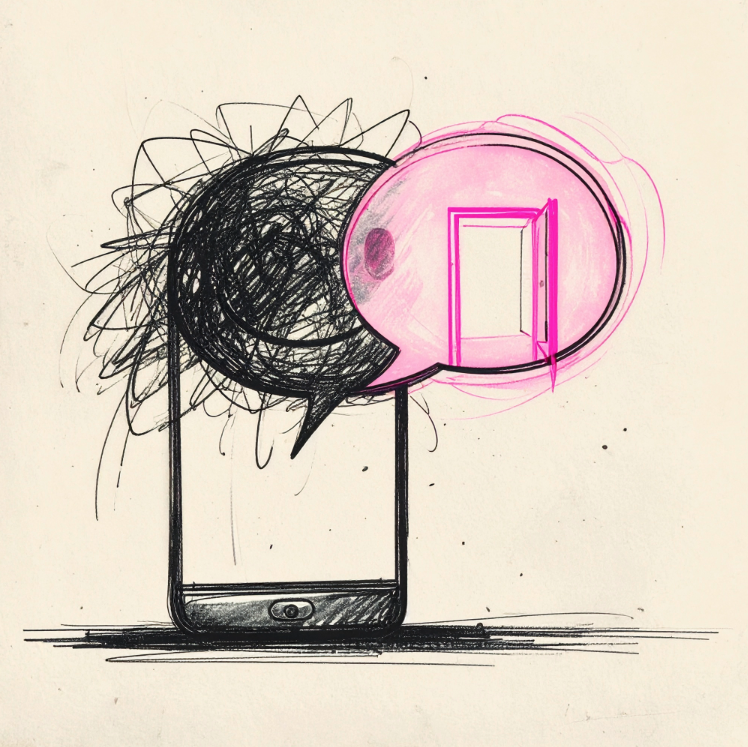
"Must be nice." Two words, and you know the whole message. Or "fine." Or the deadly "no worries!!" with its two exclamation points of pure worry. The passive aggressive text is a small machine built for one purpose: to deliver anger while denying it exists, so that the sender gets to wound you and stay innocent at the same time. If you respond to the anger, they respond to the words. "I just said fine? Why are you making this a thing?" You've been hit and made the aggressor in the same move. It's a good machine. People have run marriages on it for decades.
Reddit, asked how to answer one, splits into its two usual squads. Squad one says call it out: "that's passive aggressive, if you have something to say, say it." Squad two says return fire, match the frost, out-fine their fine, and the threads showcasing champion level comebacks do numbers. Both squads misunderstand the machine.
The comeback squad is easy to dismiss: answering passive aggression with passive aggression is two people running the machine at each other, and it can go for years, because the machine's whole design is that nobody ever has to admit the fight is happening. Nothing gets said, everything gets meant, and the temperature drops one degree per exchange.
The callout squad is wrong in a more interesting way. "That's passive aggressive" feels like naming the game, but it's a move inside the game, because it's an accusation, and the machine eats accusations. The sender was counting on deniability, and you've just attacked the deniable, so they deny it, with a bonus round about your tone. Reddit loves the callout because it feels like winning. Watch it work in real life: it converts a hidden fight into an open fight about whether there was a hidden fight. Nobody has ever answered "that's passive aggressive" with "you're right, I was being indirect, here's what's wrong."
The move that works is quieter, and it's this: answer the feeling, skip the games, and refuse the innocence contest completely.
You okay? That read like something's up. If I dropped a ball somewhere, tell me straight, I'd rather fix it than guess.
Look at what that does to the machine. It doesn't accuse, so there's nothing to deny. It doesn't return frost, so there's nothing to match. It takes the hidden thing, that they're upset, and treats it as legitimate and speakable, which is the one thing the passive aggressive message was built to avoid doing itself. You've opened the door they were pointedly not knocking on. Most people, offered that door by someone who isn't attacking them, walk through it: "sorry, it's not you, rough day," or, usefully, "well, it's the third time you've canceled." Either way the fight is now in the open where it can end.
And if they won't walk through, if the answer to "tell me straight" is another "no, it's FINE," then you've learned the machine matters more to them than the repair, and you're allowed to stop playing entirely: "okay. If it turns into something you want to talk about, I'm here." Then go about your day, uncooperatively unbothered. The machine needs your guessing to run. Starve it.
One warning about your own thumbs: the passive aggressive text is contagious, and the reply you type in the first ninety seconds will be a carrier. We wrote about rewording an angry text before you send it. The same pause applies double when the anger arrived disguised.
Don't name the game, don't play the game. Just decline it, warmly, out loud.