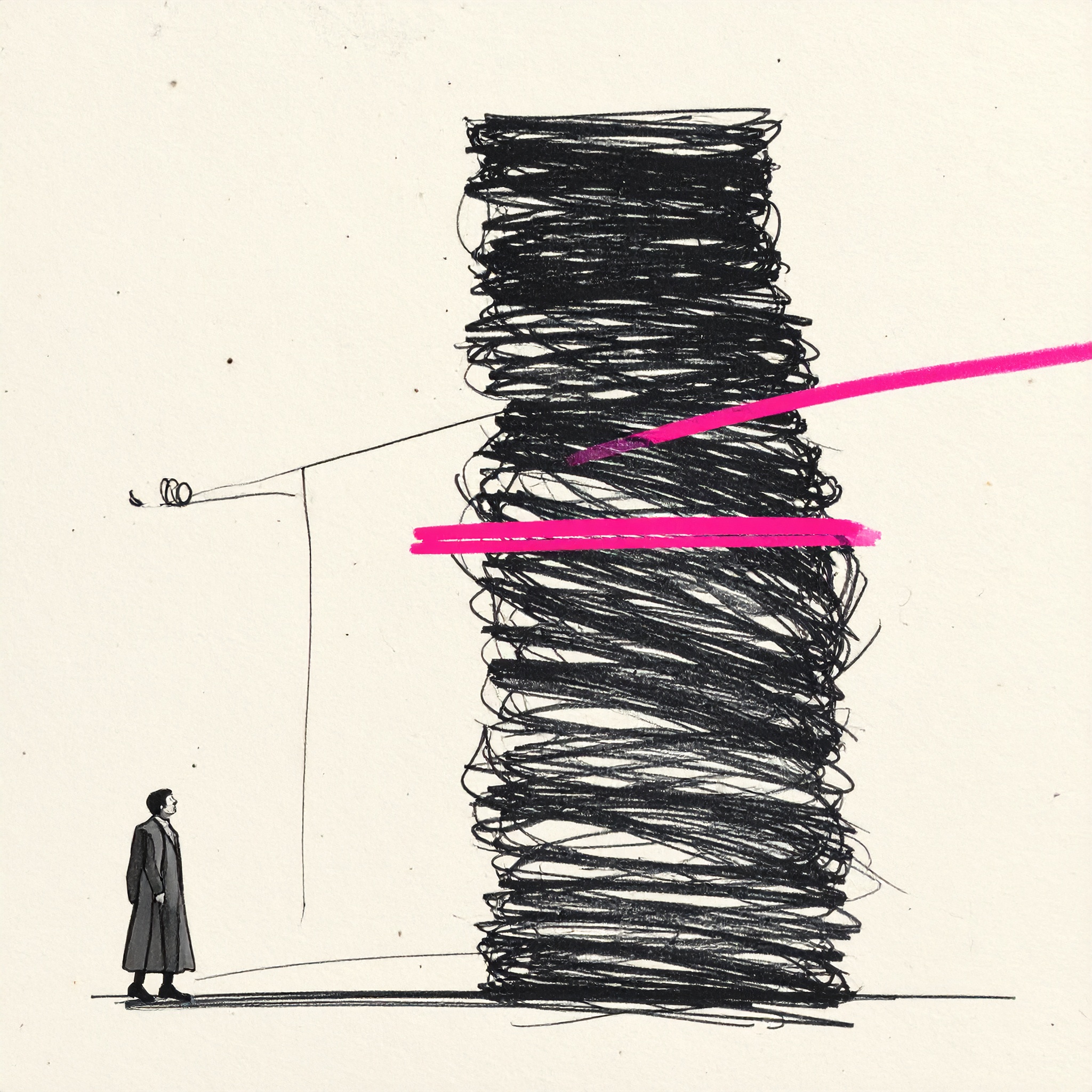
It's the small thing that does it. Not the big betrayal, the small thing. The coworker who answers a question you were already answering, in the meeting, as if you weren't speaking. Again. You feel the heat climb up your neck, and you stare at your screen, and you think: I have to say something this time.
Except you've thought that before. You thought it when they took credit for the thing you built. You thought it when they left at four and the cleanup landed on you. You thought it the last six times a "quick favor" swallowed your afternoon. Every time, you decided that saying something would cost more than swallowing it. So you swallowed it. And here you are, neck hot, swallowing again.
If you've ever sat at the edge of a message you can't make yourself send, because this person is woven into every workday and one wrong word could turn the whole office strange, this one's for you.
The bind
Here's the trap: say nothing, and nothing changes. The pattern continues, because from their side there's no reason it wouldn't. You've taught them, with months of quiet, that this is fine. Meanwhile the resentment doesn't evaporate. It compounds. It seeps into your tone, your replies, the way you brace when their name lights up your screen.
Say something, and the fear list unrolls. You'll seem petty. You'll start a thing. They'll tell people their version first. The lunch table will get weird. And you have to sit three feet from this person for the foreseeable future, with no manager's office to step into, no hierarchy to make the conversation official and contained. Just you and them and everyone watching.
So most people choose silence. It feels like the safe option. It isn't. Silence isn't neutral. Silence is a vote for things getting worse, slowly, with your own resentment charging interest.
Why you can't send what you actually feel
Here's the part that makes this message so hard, and the part nobody warns you about.
What you want to send is the history. Every instance. The credit, the four o'clocks, the talking over you, all of it, finally named. That message feels like justice. It would also go off like a grenade. Drop months of stored grievance on someone in one text and they don't hear a boundary. They hear an ambush. They get defensive, they retell it to others as "she came at me out of nowhere," and the gossip you were afraid of becomes the thing you set in motion.
The history is real. It just isn't sendable. Not all at once.
The move is to let the backlog go and aim at the next instance only. You're not putting the past on trial. You're drawing a line forward. It feels almost unfair, like all those months of swallowing should count for something. They don't, not in the message. The message only has to change tomorrow.
What that sounds like
Here's the draft that's been writing itself in your head:
I'm honestly so tired of this. You take credit for my work, you dump things on me constantly, and you talked over me again today. I've stayed quiet for months and I'm done.
True, probably. Also a grenade with the pin already out. Every sentence is a past charge, and the person reading it will spend zero seconds reflecting and all of them defending.
Here's a version aimed at the next instance instead:
Hey, can I flag something from this morning? When I'm partway through an answer in a meeting, I'd like to finish the thought before we build on it. Getting cut off today threw me a little. Not a huge deal, I just want us on the same page going forward.
Smaller. Calmer. It names one thing, today's thing, and asks for one change, going forward. No history. No verdict. It's almost boring, and boring is exactly what keeps it from becoming a story other people get to pass around.
The thing you're actually afraid of
The fear underneath all of it is that speaking will cost you the relationship. But look at what the silence already costs you. The relationship you're protecting is one where you're being worn down and saying thanks for it. That isn't worth the silence. A clear boundary aimed at tomorrow doesn't end things. It resets them onto terms you can live with.
So the heat climbs up your neck. And this time you decide not to swallow it, and not to detonate either. You name one thing. You ask for one change. You send it before you can talk yourself back into the swallowing.
It's a smaller message than the one in your head. That's the whole reason it works.