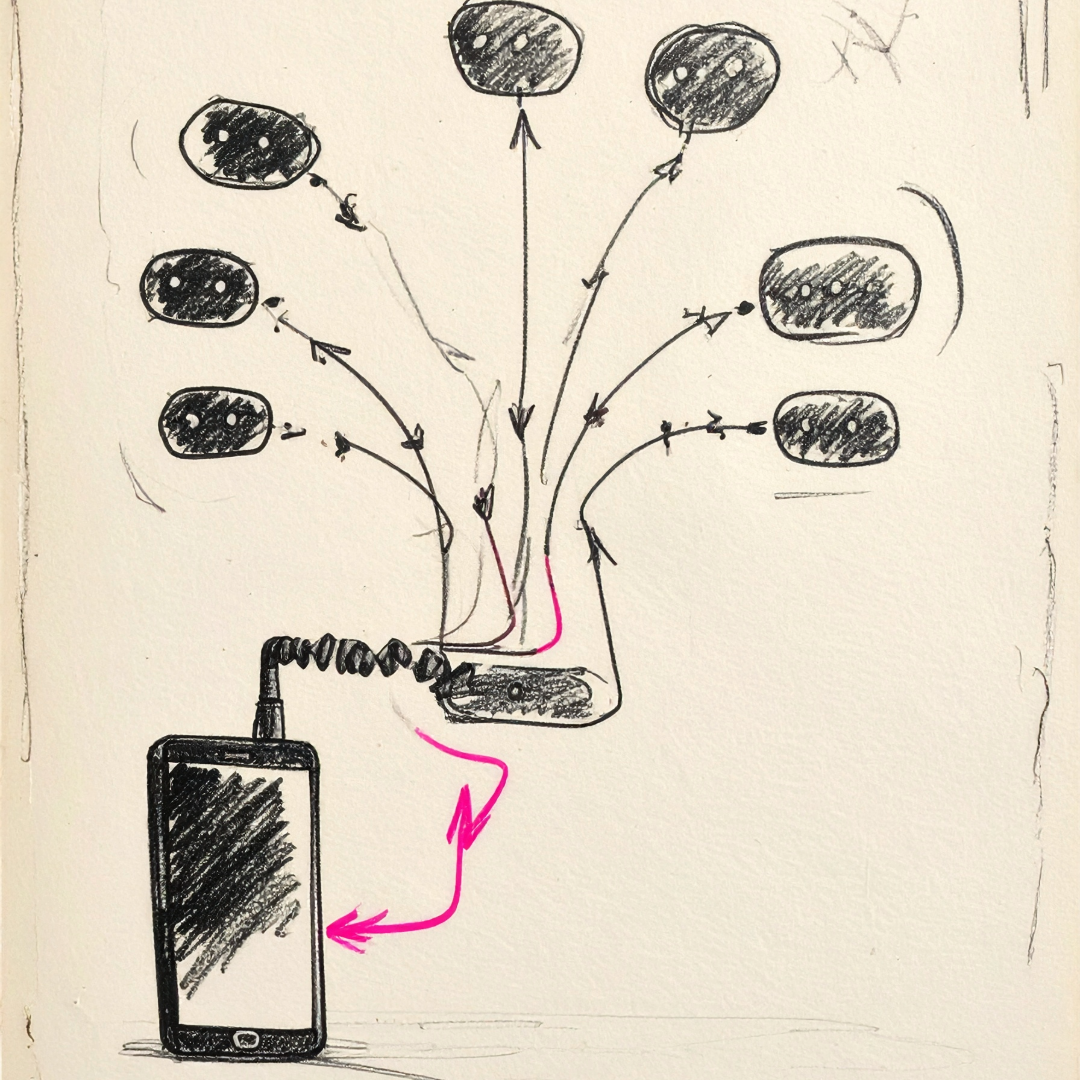
Somewhere along the way you became the help desk. Not officially. There was never a meeting. You just answered a few questions well, word spread, and now your Slack is a rolling ticker of "quick question," "sorry to bug you," and "who do I ask about," each one reasonable alone, collectively a second job that produces no output anyone measures.
Here's the trap you're in, stated plainly: every helpful DM you answer is training. You're teaching the whole company that the fastest support channel is you, personally, and that channels, forms, and documentation are for suckers. The kinder and faster you are, the harder you train them. This is why the problem never plateaus. You are running a promotion on your own attention.
Getting out isn't about becoming unhelpful. It's about making the help land somewhere reusable, and there are three habits that do it.
First, answer in public, even when asked in private. This is the single highest leverage move. When the DM comes in, "how do I get access to the analytics dashboard?", don't answer in the DM. Reply: "Good one, posting this in #data-help so the answer's findable," then answer it there, fully and warmly. Nobody reasonable is offended, you've now answered it for every future asker, and you've quietly redirected traffic to the channel. Ten repetitions of this changes where questions go. A hundred DM answers changes nothing.
Second, build the redirect message once, so it costs you nothing to send. The reason you keep absorbing requests is that redirecting feels rude and composing a polite redirect fifteen times a day is exhausting, so answering is genuinely easier in the moment. Kill that math. Write the message once, keep it pinned in a note, paste as needed: "Happy to help! Can you drop this in #support with a screenshot? That's where I (and others who can help faster) track these, DMs slip through." Warm, honest, and it names the real reason the process exists: things asked in DMs get lost, and the asker suffers for it too.
Third, for the people above you, make the drowning visible before you change anything. If support keeps arriving because leadership has no idea it exists, unilaterally going quiet reads as attitude. One message fixes the frame: "Flagging some invisible workload: I fielded about 25 support requests in Slack this week, roughly a day of time. I'm going to start funneling them to #support so they're tracked, and it's worth discussing whether this should be an official part of someone's job, possibly mine, with time carved out." Now the redirect is a process improvement you announced, not a mood, and you've opened the door to the actual fix, which is that unowned support is a job pretending to be a personality trait.
What you don't do is keep silently absorbing, because the end state of that path is well documented: resentment, burnout, and a company that never builds a real support process because you were the process, free, until the day you broke.
Be helpful in a way that compounds. Public answers, one reusable redirect, and a boss who knows the number 25.