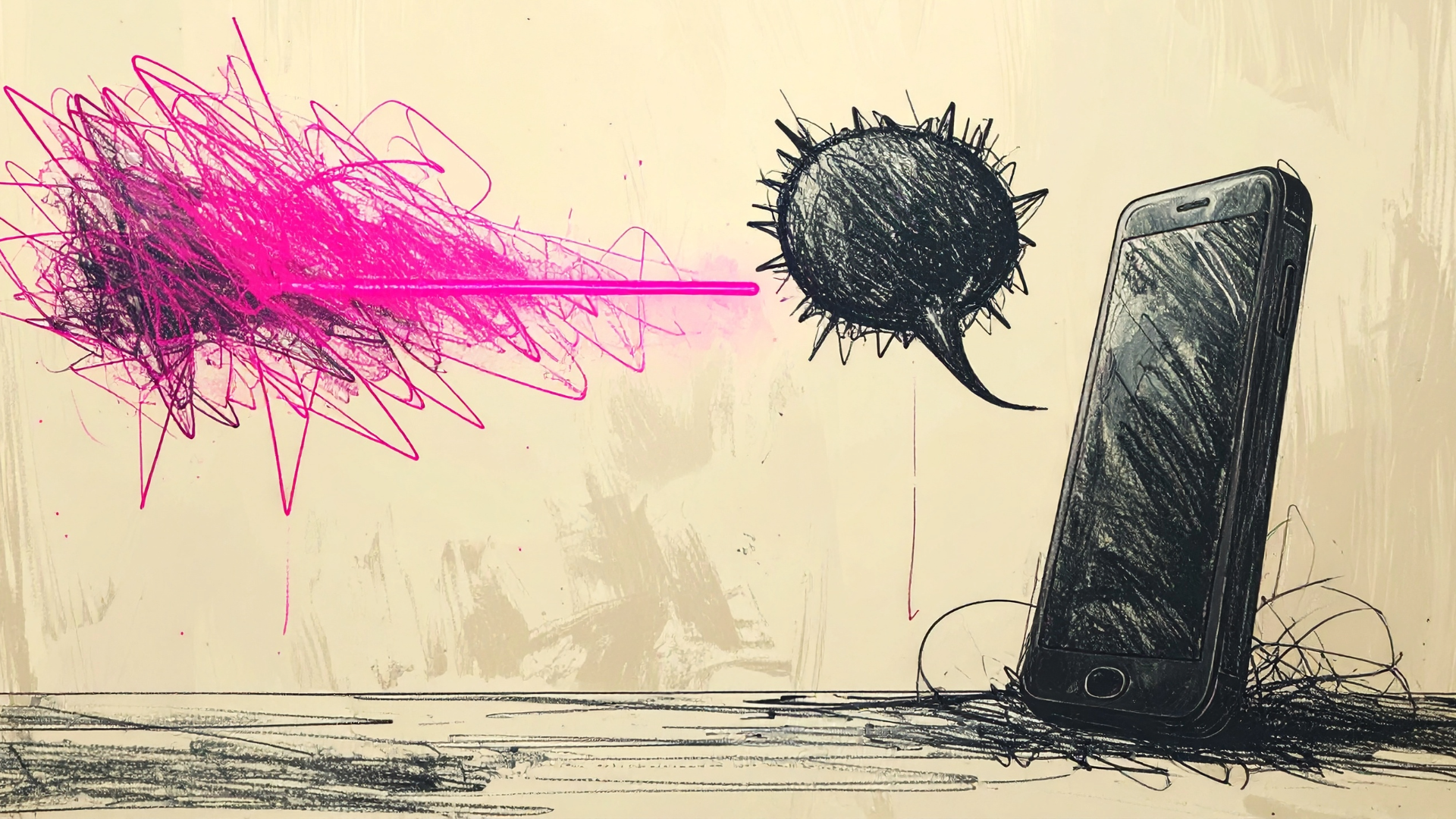
It arrives at 2:14pm in a channel with forty people in it. "This isn't what we discussed. The whole approach needs rethinking, honestly not sure how we got here." About your work. In public. And now there's a small "is typing" pressure on you, because the channel saw it, and whatever you write next will be read more carefully than anything you've written all quarter.
First, the thing nobody tells you about this moment: your reply matters more than the feedback did. Harsh comments in channels come and go, and forty spectators forget them by Thursday. What they remember is what you did next, because grace under public fire is rare, visible, and permanently associated with your name. This moment is, uncomfortably, an opportunity wearing a terrible disguise.
Second, the physiology. The comment reads as an attack, your body responds accordingly, and the reply you draft in the first five minutes will be written by that response: defensive, over-explaining, or icily sarcastic, sometimes all three in one paragraph. So the first rule is mechanical, not rhetorical. A react emoji, an eyes or a thumbs up, buys you an hour with zero cost. It says "seen, engaging soon" and commits you to nothing. Nobody has ever damaged their career with a 👀. Many have with the paragraph they typed at 2:19.
Then, before drafting, split the message you received into its two components, because harsh feedback is always a package: some amount of signal about the work, wrapped in some amount of poor delivery. These are separate problems, and here's the strategic insight most people miss: answering the delivery in public is a losing game even when you'd win it, while answering the signal in public is a winning game even when the feedback was mostly wrong. So the public reply engages the work, only the work, on level tone:
Fair concern about the approach. The context: we shifted after the vendor constraint surfaced in March, doc here [link]. Some of this may be a gap in what got communicated after that, which is on me to fix. Can you say more about which part is furthest from what you expected? Genuinely want to close the gap.
Notice its properties. It doesn't grovel, no "so sorry, you're totally right." It doesn't counterattack. It supplies facts calmly, owns a sliver where a sliver is honestly ownable, and asks a real question, which does something quietly powerful: it moves the other person from throwing verdicts to answering specifics, which is where actual work discussions live. Forty people just watched you turn a drive-by into a working session.
The delivery problem, if there is one, is real, and it goes in a different envelope: private, later, calm, and only if it's a pattern or it stung badly. "The substance of your comment was useful and I'm on it. The way it was phrased in front of the channel made it harder to receive than it needed to be. Direct is great with me, public teardown less so." That's a boundary, and boundaries travel by DM. We've written more about the shape of that message, since upward and sideways versions share a spine.
One more thing, for the version of this where the feedback is right. Sometimes the harsh comment is harsh and correct, and the strongest possible reply is fast, unqualified ownership: "You're right, that drifted from the spec. Fixing today, will post the revision here." No hedging paragraph. Public, immediate ownership of a real miss is so rare that it reads as strength, because it is.
The comment took them thirty seconds to write. Take your hour, split the package, and write the reply the room remembers for the right reason.