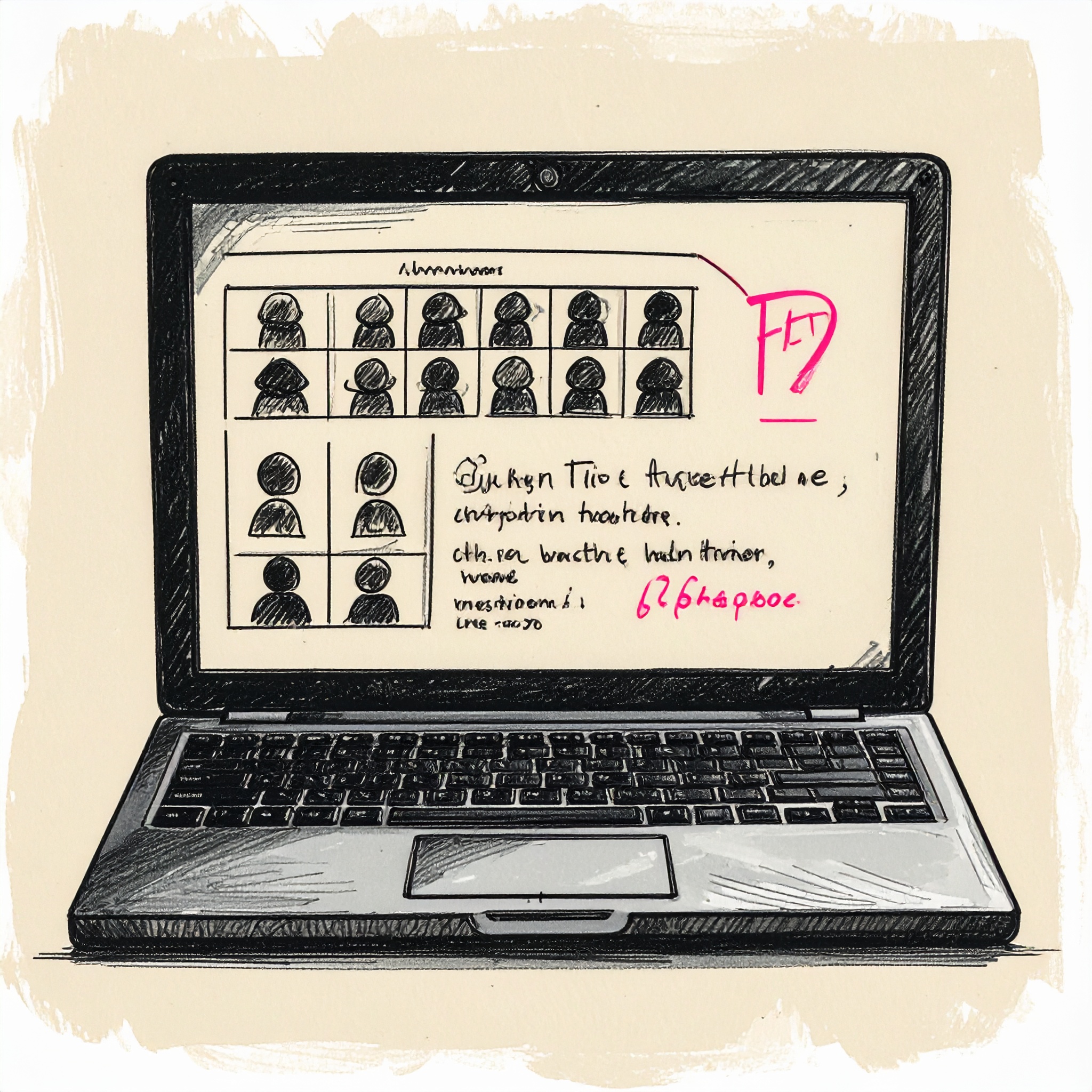
The meeting chat is a strange little stage. While someone presents, a second conversation runs down the side in text, whether you're in Teams, Slack or Zoom, and it has its own etiquette that nobody explains and everybody learns by stepping in it. You drop a quick comment, meant lightly, and it sits there in front of fourteen people reading flatter and sharper than you meant, and there's no taking it back, and the person who joined late scrolls up and reads it cold an hour later.
I've watched a one word reaction in a Slack or Teams chat spark a tense back and forth while the speaker kept talking, oblivious. I've seen a joke that would have gotten a laugh out loud read like a dig in writing. The chat feels casual, like a whisper to the person next to you, but it isn't a whisper. It's a transcript, visible to everyone, kept forever.
So the first rule is to write every chat message like the whole room will read it later, because they will. That instantly filters out the stuff that gets people in trouble: the side comment about the presenter, the snippy "well that's not what we agreed." If you wouldn't say it out loud to the group, the chat is not a safer place to say it. It's a more permanent one.
The second problem is tone, same as anywhere in text, except worse here because it's live and fast. A quick "sure, fine" typed during a meeting can read as agreement or as cold sarcasm, and the person reading it has half a second to decide which, mid-meeting, while distracted. If your comment carries any feeling other than plain agreement, spell the feeling out. "Love this" beats a bare "ok." "Real question, not a challenge:" before a pointed one saves the speaker from bracing.
And know what the chat is good for, versus what belongs out loud. It's great for the additive stuff: a link, a quick "+1," a clarifying detail, a note on who owns something. It's a bad place for disagreement, for the real question that needs a back and forth. When you find yourself typing a paragraph of pushback into the chat, stop. That's a thing to unmute and say, or to raise after, not to drop as a wall of text while someone else is mid-sentence.
The hardest one is the misreadable comment you want to send right now, while it's relevant. The moment's passing, you want to get it in, and your gut says it might come out wrong. That's the one to slow down on for five seconds, because a chat message can't be softened after the fact the way a spoken aside can. You can't read the room's faces and add "I just mean." It's there, in writing, the second you hit enter.
The chat is useful. It's also a public record disguised as a casual aside, which is exactly why people keep getting burned by it. Treat it like the small stage it is. Say the easy things freely, and give the loaded ones the half second they deserve before they're permanent.